
Andrés Marcos Esteban
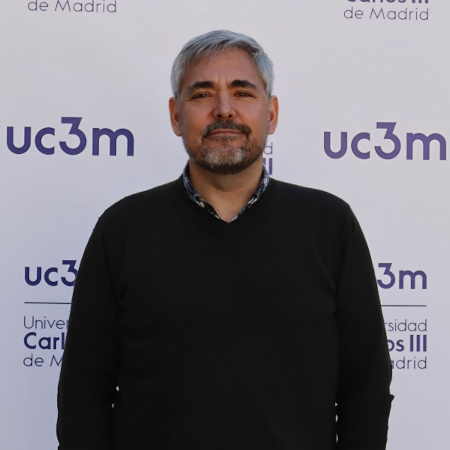
Distinguished Senior Investigator “Beatriz Galindo”
Director of the Master in Space Engineering
Office 7.1.H09 | Tel: +34 916248238
Contact: anmarcos@ing.uc3m.es
Biography
Andrés Marcos is currently a “Beatriz Galindo” Distinguished Senior Investigator (BG-DSI) at the Aerospace Engineering department of UC3M. He holds B.Sc. (1997, St. Louis University, USA), M.Sc. (2001, University of Minnesota, USA) and Ph.D. (2004, UoMinnesota, USA) degrees, all in Aerospace Engineering –and the latter two funded by NASA Langley and obtained under the supervision of prof. Gary Balas (who was one of the World foremost experts in the field of aerospace robust control).
He was a postdoctoral researcher for 2 years (Feb’04 – Dec’05) at the University of Leicester (UK) in a project that at its conclusion received the GARTEUR Award for Excellence. Then, He moved back to Spain to work in industry, Deimos Space, for 7.5 years (Jan’06 – Aug’13), first as senior engineer, then project manager, and the last 2 years as R&D control leader. He returned to academia when he joined the Aerospace Engineering department at the University of Bristol (UK) as a Tenured Senior Lecturer for 7 years (Oct’13 – Aug’20). In August 2020, he resigned from this position and founded a micro-enterprise (SME) in the UK called Technology for AeroSpace Control LTD (TASC) which in its first year won more than €400,000 in contracts with the European Space Agency (ESA).
In November 2020 he was awarded the BG-DSI to join UC3M with a 5-years project entitled “Emerging Robust Control Technologies for Aero-Space Engineering”, which was structured around helping to consolidate UC3M’s Master in Space Engineering (MISE), take over the directorship of UC3M-SENER aerospace chair, and establish the first student CubeSat program at UC3M. He joined UC3M on June 2021 as chair of excellence and since then, he has proposed as coordinator, and been awarded: a 1.5M€/Oct’21 Spanish Research Agency’s infrastructure project to create a Center for nano/micro-SATellites Technology (CSAT), a 190K€/Oct’21 award by the Comunidad de Madrid (CAM) to establish his research group in Spain, and a 1.0M€/Dec’24 CAM’s TECNOLOGIA-2024 project to develop a technology demonstration CubeSat. Also, in September 2022, he started the first student CubeSat program at UC3M, which was selected by ESA for its 1.5-years program “Fly Your Satellite! Design Booster” in December of that same year. This was the first time that a CubeSat from any university in Madrid was selected by ESA for its FYS program, and it has enabled more than 27 students to attend ESA Academy’s training-week events ever since.
In total, since 2006, he has attracted, and successfully led to completion, as coordinator or principal investigator, over 20 multi-year projects (out of 30 where he has participated) and have directly attracted over 20M€ in funding from EU-FP7, EU-H2020, ESA, and industry. Among these projects, he highlights ADDSAFE (Oct’08) and RECONFIGURE (Mar’12), which he proposed and coordinated while at Deimos Space –and which were the first two EU projects ever coordinated there. Also, it is highlighted that at the University of Bristol, he was core member of the proposal teams and subsequently PI of UoBristol, in another two EU projects, this time part of the H2020 program: FLEXOP (Jun’15) and VISION (Jan’16).
By Scopus, and as of January 2025, he has an H-index of 21 with over 2,033 citations (28/3,136 by Google Scholar) from 43 journal publications (71% in top Q1 JCR), 6 book chapters, and 124 peer-reviewed conference publications. In addition, he has been invited to give talks and seminars 67 times in universities and aerospace research centers around the World –including 5 plenary talks at renown international conferences. He has supervised to completion 3 PhD theses (all with nominations and/or best/finalist student awards) and is currently supervising another 2.
He has been an expert reviewer for the European Commission (FP7 Clean-Sky, H2020 Space, H2020 WIDERA), the Agence Nationale de la Recherche (ANR), and the European Science Foundation (ESF), as well as part of the external expert reviewer team for the launcher CALLISTO program.
Finally, he has successfully transitioned the gap between theory and practice as testified by, the very unusual in academia, flight testing of his control designs: twice in piloted aircraft (one with DLR and another with JAXA), once in a sounding-rocket, and once in an autonomous vertical take-off-and-landing vehicle (with DLR). In the same vein, some of the results from ADDSAFE were transitioned to industry by one of the teams and are flying in Airbus A350-XWB, while the work that he did with one of his PhD students for launcher ascent control (specifically, with Diego Navarro-Tapia) has flown in the VEGA-C launcher and is used as the basis for their new controllers.